 What Garage Door Noises Actually Mean in Wentzville
Wentzville homes built between 1978 and 2011 carry openers and torsion springs aging out together.
Deciding If Your Wentzville Garage Door Still Has Life Left In It
Wentzville homes mostly date 1978-2011. We break down which original garage doors, springs, and openers from that era are still worth repairing versus replacing.
Local detail
When It Stops Being a DIY Job
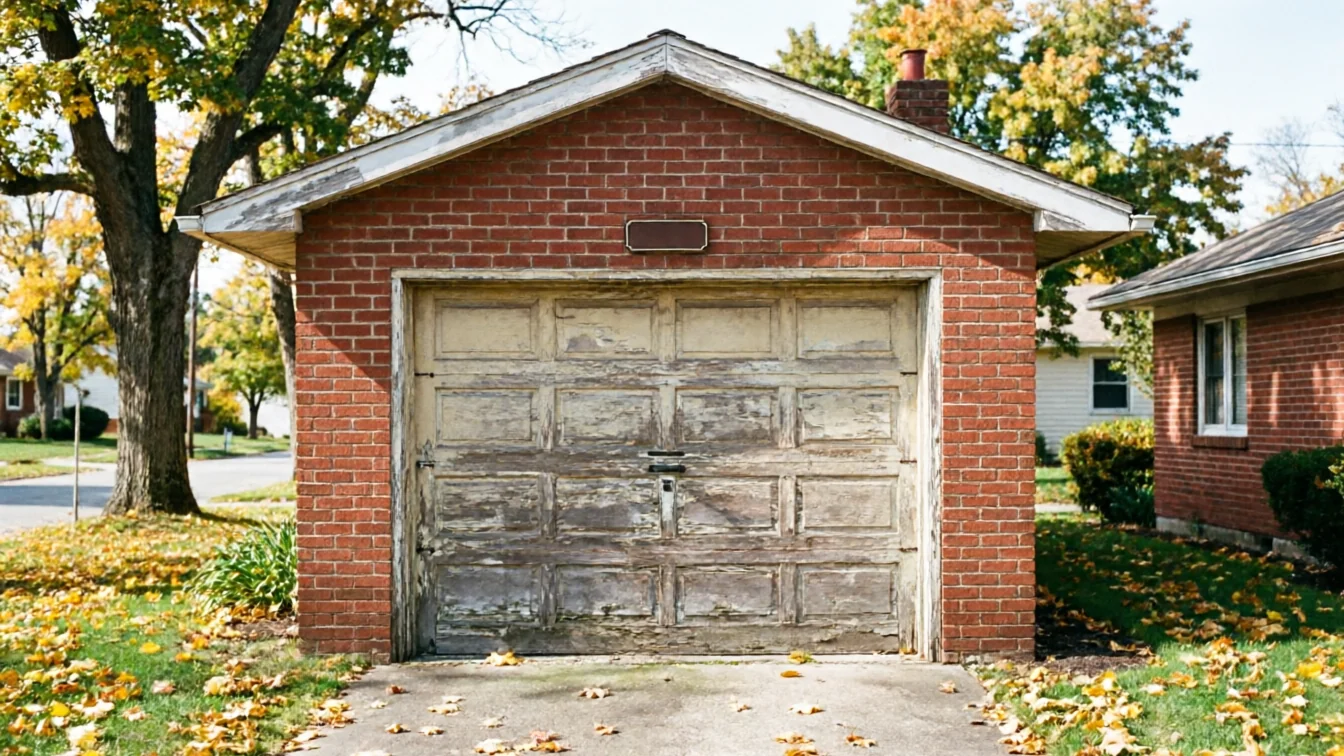
A sagging panel or a spring that's lost its tension is one thing. A door that won't stay in track, or a cable that's frayed down to a few strands, is another. Most houses in the Wentzville Garage Door Pros service area went up between 1978 and 2011, with the median build year sitting at 1998, so a lot of what we see is original equipment pushing three to four decades old. That's past the point where a can of lubricant and a YouTube video fixes anything structural.
If your door is binding on the track, if the opener strains and reverses before it closes, or if one spring has already gone and the other is the same age, you're past adjustment territory. Torsion springs from that era were sized for lighter doors than some of what's been bolted onto them since - added insulation, a new heavier-gauge steel skin, a bigger opener. Swapping one spring without checking the other, or without checking if the drum and shaft are still rated for the door's actual weight now, is how people get hurt or buy the same repair twice. That's the line: cosmetic and adjustable, you can handle. Anything involving a spring under tension or a cable, call someone.
The area
The Situation
Across the twenty communities we draw work from - Flint Hill, Foristell, Lake St. Louis, St. Paul, Wright City, Moscow Mills, Dardenne Prairie, Innsbrook, Troy, Cottleville, Truesdale, Defiance, Weldon Spring, Winfield, Warrenton, Marthasville, Hawk Point, Wildwood, Washington, and Clarkson Valley - the bulk of the housing is 1980s and 90s construction. That's a specific generation of garage door: steel sectional, often a single layer of insulation or none, hardware sized for the lighter doors builders installed to hit a price point, not for 30-plus years of daily cycling.
With 35,776 owner-occupied houses out of 51,731 households in the area, a lot of these original builder doors are now pushing 30 to 45 years old. At a median household income of $113,621, most owners here can afford a full replacement without much strain, but plenty still call us to repair a door that's only showing its age cosmetically - a dented panel, a worn roller, a noisy track - rather than one that's actually failing. We'll tell you straight which category yours falls into before we quote anything.
What we find
Leaving It Alone
Here's the honest part: we don't always recommend fixing an old door, and we don't always recommend replacing one either. A worn roller or a bent track section on a door built in the 90s is a cheap fix and buys you years. A cracked bottom panel on a door whose springs are also original and whose opener is grinding its gears is a different math problem - you'd be putting new money into three old problems instead of one new door.
What we won't do is keep patching a door that's telling you it's done. If you've had the same door serviced twice in two years for different failures, the third call usually isn't worth the trip charge. We'll say so. A door that's original to a house built in the late 90s has had a good run; pretending it hasn't is how people end up paying for four small repairs instead of one replacement.
Leaving a genuinely failing door alone - not fixing it, not replacing it, just living with the symptom - is the one option we'd steer you away from regardless of budget. A spring that's starting to go doesn't fix itself, and a track that's slowly bending gets worse every cycle, not better.
How we work
What Local Conditions Do
This area sits in a cold moderate climate band, which means the tracks, springs, and hardware on these older doors see real temperature swings - summer heat that expands steel, winter cold that contracts it and stiffens lubricant - in a way a milder region's doors simply don't experience. On a door that's already 25 or 30 years old, that cycling is what turns a stiff spring into a broken one, usually on the coldest morning of the year rather than a convenient Tuesday afternoon.
It also means moisture and condensation on an uninsulated or thinly insulated door - common in the 1980s and 90s builder-grade doors that make up a lot of this area's stock - matters more here than it would somewhere without real winter. Rust on cable ends and torsion bar hardware shows up earlier on doors that have spent three decades going through freeze-thaw cycles than it would on the same door somewhere that doesn't see winter. If your door is original to a house from that era, that's the wear pattern we expect to find, and it's usually what decides whether a repair is worth doing or whether you're better off starting over.
Questions
Common questions
My garage door is original to my house built in the late 90s. Is it worth fixing or should I replace it?
Depends what's actually wrong. A worn roller, a bent track, or a dented panel on a door that age is usually a fair repair. If the springs are also original and the opener is struggling, you're patching three old problems at once - at that point a new door often costs less over the next few years than repeated repairs.
Why did my spring break in the winter and not during the rest of the year?
This area's cold moderate climate means steel springs contract and stiffen in winter cold after years of summer heat expansion. On a spring that's already decades old, that repeated cycling is usually what finally snaps it - cold mornings just happen to be when the weakest point gives out.
Is it normal for an older door's hardware to have rust on it?
On a door that's 25-plus years old and has been through that many freeze-thaw winters, some rust on cable ends and torsion hardware is expected, not alarming by itself. What matters is how deep it goes - surface rust we can clean and treat, but pitted or flaking cable strands mean replacement, not cleanup.
Do you ever tell people not to repair their door?
Yes. If a door's had two unrelated failures in two years, or the springs, opener, and panels are all failing around the same time, we'll say the repair isn't worth it rather than keep billing for small fixes on a door that's done.
Recommendation
You Might Also Like
More garage door guides for Wentzville homeowners.
What Garage Door Noises Actually Mean in Wentzville
Wentzville homes built between 1978 and 2011 carry openers and torsion springs aging out together.
 When a Wentzville Garage Door Needs More Than a Quick Fix
Most Wentzville garage doors date to the 1978-2011 building boom, with builder-grade springs and openers that wear out fast in Missouri's cold winters.
 Openers, Power Cuts, and Wentzville's Housing Stock
Wentzville homes built mostly between 1978 and 2011 carry openers that struggle with winter power cuts.
Ready when you are
Need a garage door sorted in Wentzville?
Wentzville Garage Door Pros repairs and installs garage doors, springs and openers in Wentzville, MO and the surrounding area.